For twelve years, I sat in the newsroom of a small-town paper in rural Vermont. My desk was piled with folders, not pixels. If we wanted to know what was happening for entertainment—whether it was the high school play, a bluegrass concert at the town hall, or a local bingo night—we looked at the classifieds or the front page of the Rutland Herald. The geography of our leisure was defined by the distance our cars could travel before the engine light flickered or the snow started to pile up.
That world hasn’t vanished, but it has become porous. We are witnessing a fundamental shift from place-based entertainment—where your options are defined by your zip code—to access-based entertainment. This isn’t a "revolution," a term I’ve always found to be a bit of lazy shorthand rutlandherald for marketers. It is a slow, steady migration of our leisure habits toward a model of digital access expansion.
You know what's funny? however, this shift brings its own set of problems. In the rush to digitize, we’ve lost some of the reliability we once took for granted in traditional media. I often see "scraped" articles—content pulled from various sources and repackaged—that lack basic journalistic integrity. If you are reading about a new gaming site or a digital platform and you cannot find an author name, a publish date, or clear information on costs, you are not being informed; you are being sold to. Journalism, even the digital kind, requires a paper trail.
The Backbone of Access: Connectivity and the FCC
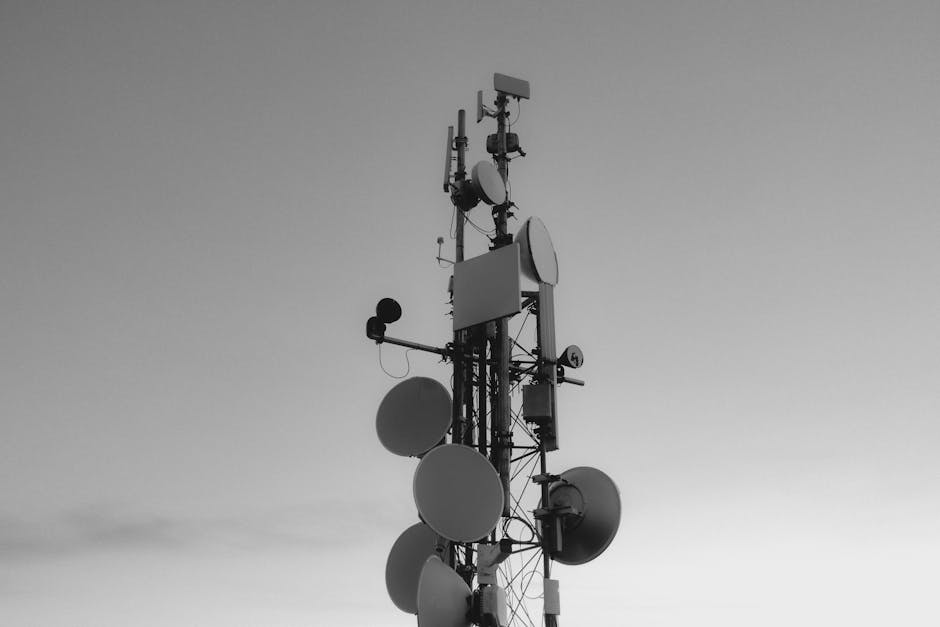
The primary driver of this shift isn’t just software; it’s infrastructure. In rural parts of the country, entertainment options were once limited by low-bandwidth connections. You couldn't "stream" content if you didn't have the broadband capacity to pull it through the wire.
The Federal Communications Commission (FCC)—the U.S. agency responsible for regulating interstate and international communications by radio, television, wire, satellite, and cable—has spent the last decade navigating the tricky balance of universal service. For a long time, the FCC’s focus was on basic telephony. Now, the mandate has shifted toward ensuring that rural households have the same level of digital access as urban centers. When that connectivity improves, the "geography limits fading" isn’t just a buzzword; it’s a reality for someone sitting on a porch in East Wallingford who suddenly has the same access to leisure tools as someone in Burlington or Boston.
Beyond the Physical: Gaming as a Mobile-First Experience
Once the infrastructure is in place, the format of entertainment follows. We are seeing a move toward mobile-optimized interfaces, which are essentially website layouts designed to function perfectly on the smaller screens and touch-based inputs of smartphones.
Take, for example, platforms like MrQ (mrq.com). These services represent a departure from the "destination" model of entertainment. You don’t have to drive to a regional center to find a specific type of play. Instead, the interface adapts to your device.
Is this "convenience" or "access"? It is vital to distinguish between the two. Convenience is having a store closer to your house; access is having the ability to participate in something that was previously physically impossible to reach. For those living in areas where traditional casinos or entertainment hubs are three hours away, mobile-first platforms provide a level of access that was once the exclusive domain of those living in metropolitan hubs.
The Mathematics of Chance: RNG Explained
When we talk about digital games, especially those involving slots, there is often a lot of confusing jargon. You’ll hear about "luck" or "hot streaks." As someone who has spent years covering the actual, quantifiable mechanics of community life, I find it important to peel back the curtain on how these systems work. They don't run on "luck"; they run on algorithms.
The engine behind these games is the Random Number Generator (RNG), which is a software algorithm used to generate a sequence of numbers that lack any predictable pattern. Every spin, every turn, and every outcome is determined by a mathematical calculation that ensures the result is independent of the previous one.
A few things to keep in mind regarding RNG systems:
- Fairness: Because the RNG is designed to be unpredictable, the outcome is statistically "fair," meaning no one—not the player, not the host—can predict the next result. No "Hot" or "Cold" Streaks: The software does not "remember" previous losses or wins. It treats every single interaction as a unique event. Regulatory Oversight: Legitimate gaming platforms undergo audits by third-party testing agencies to ensure that their RNGs are functioning as advertised.
If a platform isn't transparent about its licensing or its auditing processes, don’t play. Transparency is the bedrock of trust, just as a byline is the bedrock of an article.
Comparing the Old and New Models of Leisure
To understand why our expectations for entertainment have changed, it helps to look at the differences between the traditional model and the modern, connected model. Geography was once a gatekeeper; today, the gatekeeper is the quality of your internet connection.
Feature Place-Based Leisure (Legacy) Connected World Leisure (Modern) Access Limited by physical proximity Universal (subject to connectivity) Format In-person, scheduled events On-demand, mobile-optimized Verification Local word-of-mouth Audited digital algorithms (RNGs) Cost Explicit (tickets, gas, time) Variable (subscription or per-use)
The Responsibility of the Digital Citizen
One thing that hasn't changed, whether you are reading the *Rutland Herald* or browsing a new digital app, is the need for critical thinking. When I look at a text that fails to provide an author's name or a publication date, I immediately suspect that the information is being provided to persuade, not to inform.
When you are choosing how to spend your leisure time—whether you’re playing on a mobile interface or participating in a community group—ask yourself these questions:
Who is behind this? If there is no transparency, there is no accountability. Is the technology explained? If a site uses "RNG" but doesn't explain that it's a randomizing algorithm, they aren't respecting your intelligence. Is this actually affordable? Always look for clear pricing details. If the "cost" is hidden in complex terms, it is a warning sign.Conclusion: Living in a Connected World
The boundaries of entertainment have become less rigid, yes. For many of us, that has opened doors that were previously locked by mountains, distance, or simply a lack of regional infrastructure. But as those geographic lines blur, we have to become more diligent about the digital lines we draw for ourselves.
We are no longer limited to what’s available on Main Street, but we are now tasked with the responsibility of vetting what’s available on the screen. Whether it's the *Rutland Herald* informing us about a local town council meeting or an app provider explaining how their RNG ensures fairness, the goal remains the same: knowing exactly what you are engaging with, why it matters, and who is providing the information.

The "connected world" isn't a magical place; it's just our town, expanded. Treat it with the same skepticism and curiosity you would if someone walked into your living room and tried to sell you a used car.
Note: This article was written with an emphasis on independent reporting standards. Always check the source and authority of any digital platform before engaging with its services.